
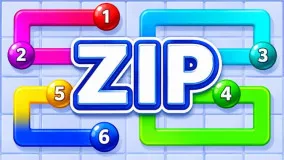
Zip
Connect the numbered dots with one unbroken path, fill every square, and solve clever grid puzzles as each new level adds a tougher twist. Find the right route.












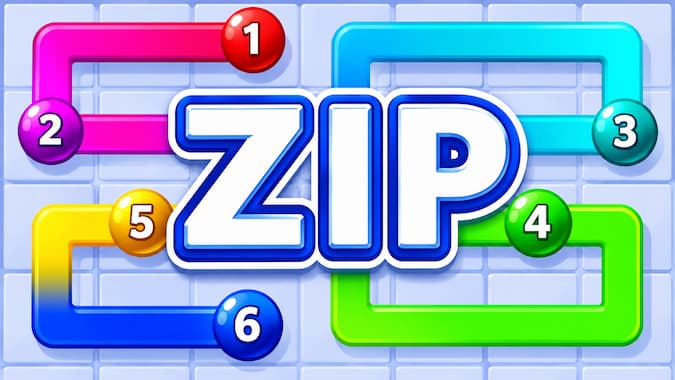
Zip is a grid puzzle with one job: draw a single line through numbered squares in order, 1, 2, 3 and so on, without ever lifting your finger or mouse. The twist is that the line must also pass through every blank square on the board. Leave even one empty and the level doesn’t count.
Why People Keep Playing Zip
One rule to learn: Follow the numbers upward and fill the grid. That’s all the tutorial you need.
A big pile of levels: Layouts change from one level to the next, so you’re rarely solving the same shape twice.
Difficulty that creeps up: The first grids let you get away with a few guesses. Later ones punish them, and you’ll need to look several turns ahead before you move.
Achievements: New ones unlock as you clear harder puzzles, which gives you a goal besides the next level.
Nothing to get in the way: No extra mechanics compete for your attention, so the game comes down to thinking.
How to Play Zip
Each level opens with a grid where some squares already hold numbers. You build one continuous path that touches those numbers in ascending order and leaves no square untouched.
Look over the grid. Find the number 1, see where the others sit, and judge how much room lies between each pair.
Sketch a rough route in your head. The path can’t skip a corner or split in two, so think about where it will have to squeeze through.
Draw the line. Move from number to number, and if you box yourself in, back up and redo that stretch instead of starting over.
Clear the level. Once the last number is reached and every square is filled, the next puzzle opens.
A Few Tips
Begin with the squares that have the fewest ways in, such as corners and narrow strips along the edges. They’re the first to get stranded when a path wanders off. If the start feels too open, try tracing backward from a high number toward the lower ones, since the end of the route is often easier to pin down.
Who Is Zip For?
It suits anyone who likes puzzles that take ten seconds to explain and much longer to solve. Short sessions work fine, and so do long ones when a stubborn level won’t let go.
Play more:
- Bubble Shooter 2026: A fresh take on the classic. Aim, match three or more bubbles of the same color, and clear the board for a higher score.
- Bubble Classic: The traditional bubble-popping game with simple controls and no extras. A good pick if you like the original style.
- Bubble Rush 2: A faster bubble-popping sequel for players who want more speed and a bigger challenge.