

Flip Spot
At first I thought Flip Spot was a basic flipping game: jump, hold the button to spin, release and land. But after a few rounds I figured out that the real trick wasn't the flip, but knowing exactly when to stop.







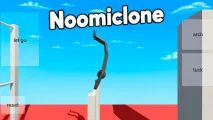















At first, I thought Flip Spot was a basic flipping game: jump, hold the button to spin, then release and land. But after a few rounds I figured out that the real trick wasn't the flip but knowing exactly when to stop.
Estimate the distance from the first jump at each location
When I get a new starting point, I don’t try to do something flashy right away. The first try is more about seeing how long the character is in the air and where they land.
If the landing platform is close, a simple single flip usually suffices. When the distance is greater, holding the button longer helps you make better use of the extra airtime. This trial-and-error approach helps avoid a common mistake: applying the same spin duration to every level.
Watch the feet as the character begins to descend
While the character spins, the whole body’s movement can easily distract you. I find that focusing on the feet is far more useful.
When the feet start pointing toward the landing zone, it’s usually time to prepare to end the spin. If you hold the button too long, the character might complete an extra fraction of a rotation and land at an awkward angle.
Especially with small platforms, I tend to release the button a bit earlier. This gives the character extra time to stabilise their body before touching down.
A high platform doesn't mean you have to do multiple spins
A high starting point certainly gives you more airtime, but I don't view that as a reason to try and cram in as many rotations as possible.
For instance, if I know a high platform allows enough time for two rotations, I’ll try two first before ramping up the difficulty. If the landing is stable, then it’s worth attempting more. Conversely, if the character frequently lands off-balance, reducing the number of rotations is more effective than trying to correct the posture at the last second. A near-miss landing often requires tweaking just one move.
A common type of failure in Flip Spot occurs when your character travels the right distance and nearly completes the rotation but falls upon impact.
In this case, don't try something entirely different. But remember how the character was still spinning when they approached the platform. If they were still rotating, release the button sooner; if their feet weren't pointing downward yet, hold it a little longer.
Making even a split-second adjustment can yield a different result. And that's why I love the game's quick-retry mechanic: you immediately see whether your tweak worked.
Don’t sacrifice a good landing for an extra flip
When you have the controls dialled in, you can be tempted to try longer rotations. But if the landing zone is narrow or the distance is tricky, I’m all about landing safely.”
Better to do one less flip and land cleanly than to do a multi-flip performance that ends in a wipeout. When you know the place, you can always go back and try to push your limits.
More speed? Then try Turbo Flip
Flip Spot keeps its gameplay simple but surprisingly challenging. Every jump is about finding the right balance between rotation and timing, while a small mistake can ruin a perfect landing. Keep practising, adjust your timing, and you’ll soon be turning tricky flips into smooth, satisfying landings.